Products

Case Study
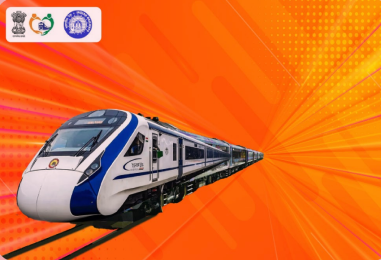
Railways are the lifeline of India and connect all its states from Kashmir to Kanyakumari

Railways are the lifeline of India and connect all its states from Kashmir to Kanyakumari
A regular 10-digit phone number (like a standard local number) that mobile operators approve for business use. It allows companies to send out a high volume of texts cheaply without looking like a robot or a spammer, keeping a friendly, local feel.
Texting that goes both ways. Instead of a business just blasting an alert at you that you can’t reply to, you can text back to ask questions, change an appointment, or talk to a real person.
Ultra-strict digital security. To log in, you have to prove who you are in three separate ways: 1. Something you know (a password), 2. Something you have (your physical phone), and 3. Something you are (your fingerprint or face scan).
The newest and fastest mobile internet. For businesses, it means zero lagging, crisp video calls, and the ability to send huge files to team members or customers who are on the move.
Any text message sent automatically from a computer software platform straight to a person’s phone (like automated shipping updates, flight alerts, or password codes).
The setting on a mobile device that acts as a bridge to connect it to the internet or a mobile network. Companies use custom ones to create private, secure internet tunnels for their team’s devices.
A smart virtual assistant that reads what a customer types and writes back with human-like answers. It helps businesses handle common questions and route requests 24/7 without needing a human worker online.
A simple code language used to build the basic brain of a standard chatbot. It basically maps out: “If the customer says X, reply with Y.”
Replacing the sender phone number on a text message with your company’s actual name (like ONEXTEL). It makes the message instantly recognizable and trusted.
A digital connector that allows two entirely different software programs to talk to each other and share data. For example, it lets you plug text messaging or WhatsApp directly into your company’s sales software.
A unique, secret digital password that proves a piece of software has permission to connect to an API. It acts like an automated security guard.
A visual alert that pops up directly inside a mobile or desktop application to share real-time updates or messages while you are using the platform.
A temporary digital security pass passed between computer systems during a login session so a user doesn’t have to re-type their password every single time they click a new page.
A straightforward security setup that checks an identity using only a standard username and password.
Logging into an account using your unique physical traits, like a fingerprint or facial scan.
Sending out a single text blast to thousands of customers who signed up for updates all at once (ideal for flash sales and big announcements).
Renting your company’s infrastructure, software, or backend tools from a cloud provider instead of building and buying expensive tech setups yourself.
A dedicated team or cloud setup designed to handle a large volume of incoming and outgoing phone calls for customer service or sales.
The behind-the-scenes system that takes an incoming customer call and automatically sends it to the right person or department based on what they need.
Assigning unique phone numbers to different advertisements (like one number on a billboard and another on a Facebook ad) to see exactly which marketing campaign is making the phone ring.
Using software to automatically convert spoken phone conversations into written text documents for easy reading and searching later.
A quick, private audio note played only to a support agent right before they connect with a live caller (e.g., “This customer is calling about a refund”). The caller never hears it.
The feature that shows your business name or verified phone number on a customer’s phone screen when you call them, making them more likely to answer.
A highly advanced AI model that understands natural, casual language and talks just like a human. Businesses plug it into customer service to handle tricky or friendly conversations smoothly.
An automated software helper that takes care of simple, repetitive tasks online—like tracking an order or answering basic FAQs—so human support agents can focus on bigger problems.
A button or link on a website or app that connects a customer directly to a live phone call with a business in a single tap—no manual dialing required.
A sales strategy focused on talking to buyers through casual, real-time chats on apps like WhatsApp or Live Chat instead of forcing them to fill out long web forms.
A cloud platform that lets companies easily add communication tools—like texting, voice calls, and WhatsApp—directly into their existing software using pre-built blocks of code.
The central software hub where a business organizes and tracks every customer detail, purchase history, and past conversation.
Giving individual team members their own direct, external phone lines so clients can call them straight without going through a central office receptionist or switchboard.
A digital receipt sent back by the mobile network confirming whether a text message actually landed on the customer’s phone.
The technology that turns telephone keypad presses into digital signals. It’s the engine behind phone menus (e.g., “Press 1 for English”).
A tracking feature that automatically changes the phone number displayed on a website based on how a visitor found the site (e.g., via a Google search vs. a paid ad), showing exactly what marketing works.
A tool that lets a company’s internal software automatically send out transactional emails like password resets or receipts instantly.
What happens when an email cannot be delivered to an inbox and gets rejected back to the sender (usually due to a dead or incorrect email address).
A digital backup plan. If your main texting network suddenly goes down, failover instantly routes the messages through a backup network so nothing gets lost.
A special text message that pops up instantly as a full-screen alert and disappears the moment it is dismissed without saving to the inbox (used for ultra-sensitive codes).
An early generation of mobile data tech that first allowed cell phones to connect to the web. It laid the foundation for modern 4G and 5G.
A feature that lets a business or person pull multiple people into a single, shared chat thread.
The universal global standard for mobile networks that ensures your phone calls and texts work smoothly when traveling across different countries.
A massive carrier database that tracks mobile numbers. Businesses do quick HLR checks to see if a phone number is active and valid before paying to send a text blast.
The universal language used to move information across the web. In messaging, it’s what a business app uses to tell a text provider, “Hey, send this text out now.”
A unique 15-digit serial number hardcoded into every single mobile phone in the world, acting like a digital fingerprint to track or lock lost devices.
Any text, chat, or WhatsApp message sent by a customer directly to a business dashboard.
Smart software that doesn’t just read from a rigid script. It actually pays attention to the context of a conversation and adapts its replies to feel like a personalized, natural chat.
Apple’s custom operating system that runs iPhones and iPads.
An international certification awarded to companies that maintain exceptionally strict quality and customer satisfaction standards.
An automated phone menu system that talks to callers and lets them choose options by speaking or pressing numbers on their keypad.
A technical glitch where data packets arrive out of order, causing audio or video on an internet call to clip, skip, or sound choppy.
The physical action of a caller hitting a number button on their phone keypad to navigate an automated phone tree.
A specific word that customers text to a business number to trigger an automatic reply or join a list (like texting “JOIN” to a short number to subscribe).
A mandatory process where a business verifies the true legal identity of its clients to prevent fraud and illegal accounts.
The tiny delay or lag it takes for data to travel from the sender to the receiver across a network.
A real-time messaging window embedded directly on your website or app so browsing customers can chat with a support or sales agent instantly.
The massive AI engine trained on huge amounts of text to read, write, and predict human language. It is the powerhouse technology behind modern, smart virtual assistants.
Long Code: A standard 10-digit phone number meant for casual, two-way conversations.
Short Code: A memorable 5-to-6 digit number built for massive, high-speed marketing blasts and alerts.
Automated data sharing between two physical machines or smart devices without any human involvement (like a smart power meter sending usage data directly to a utility company).
A privacy feature that connects a caller and a receiver while hiding both of their real phone numbers behind a temporary placeholder number (like how Uber protects passengers and drivers).
An upgraded text message that lets businesses include images, videos, audio clips, or PDFs rather than just plain text.
The system that lets a customer switch to a new mobile network provider while keeping their exact same phone number.
The full, international technical name for a complete mobile phone number including its country code (ensuring global networks can find it).
Reaching customers across separate, disconnected platforms (like running email, SMS, and phone lines entirely independently of one another).
The specific part of AI that helps software read between the lines. It allows a customer service bot to easily understand slang, typos, and casual writing styles.
The broad technology that allows computers to read, talk, and mimic human language so automated systems don’t sound like stiff, robotic machines.
A 24/7 technical control room where network experts monitor system performance and security to keep communication networks up and running.
A sender identity that displays as a regular, clickable phone number, allowing customers to easily hit reply and text you back.
Linking all your communication tools (SMS, WhatsApp, Email, Voice) together into one unified system so a customer can start a conversation on WhatsApp and finish it via SMS without repeating themselves.
The official process where a customer checks a box or gives explicit permission to a business to send them marketing messages.
The quick action a customer takes to stop getting updates from a company (like texting the word “STOP”).
A temporary, secure security code texted or sent over WhatsApp to verify your identity during a login or payment.
Any text, chat alert, or notification sent out from a business system to a customer.
When a customer initiates a text conversation with an automated system (like texting the word “BALANCE” to a bank to check an account).
Standard, everyday text messaging sent manually back and forth between two individual people.
A network issue where tiny pieces of data get lost while traveling across the internet, leading to frozen video frames or dropped audio on calls.
The unique sequence of numbers acting as a digital address for a communication line.
The underlying bundle of software and hardware tools that lets developers build and run applications.
The traditional, old-school worldwide network of physical copper phone lines and switching centers.
An instant popup message delivered straight to a user’s mobile screen or desktop browser from an installed app to share breaking updates.
A futuristic field combining super-fast quantum computers with AI. In the future, it will allow business software to handle massive routing, data processing, and security checks instantly.
The modern upgrade to standard SMS that adds app-like features (like high-res pictures, verified company badges, and quick-reply buttons) directly inside a phone’s native texting inbox.
A lightweight, fast, and modern way for software programs to talk to each other over the internet. It is a developer favorite for adding messaging features to an app quickly.
An automatic feature that tries to resend a text message or reconnect a voice call if the very first attempt fails due to a bad signal.
A mobile feature that lets your phone hop onto another carrier’s network to stay connected when you travel outside your main provider’s coverage area.
Using a simple software dashboard or code to blast a single text out to a large group of people simultaneously.
A highly memorable 5-digit or 6-digit phone number approved specifically for massive, rapid business text campaigns and fast security pins.
Making voice and video calls over a high-speed internet connection instead of traditional, expensive copper phone lines.
A virtual phone line that connects a company’s older, physical office phone hardware to the modern internet, upgrading them to internet calling without buying all-new gear.
A heavy-duty, industrial-strength language used by major networks and messaging providers to transfer millions of text messages instantly.
The technical name for a traditional, plain text message limited to 160 characters that works on every mobile phone in the world without needing internet.
A specialized middleman company that connects software platforms directly to multiple mobile carriers to handle the logistics of routing texts globally.
A short snippet of code that connects a company’s software or CRM directly into a text delivery network to automate notifications.
The standard length limit of 160 characters for a single traditional text message. Going over this can trigger multi-message fees.
The success rate tracking how many of your sent text messages actually make it to the recipients’ phones.
The digital translator engine that takes text messages sent from a web application and converts them into a format mobile phone networks can understand.
A specific word that consumers text to a company number to automate an instant action (like texting “OFFER” to get a discount code).
Automated text alerts sent to keep customers informed on the go (like appointment reminders or bank transaction alerts).
A monitoring tool used to trace the real-time path, speed, and final status of business text messages.
The central hub inside a mobile carrier’s network that acts like a digital post office, sorting, saving, and forwarding text messages.
A brief electronic message sent over cellular networks directly to a phone.
Technology that reads written text aloud using a natural-sounding computer voice. It’s used to automatically read out balances or security codes over a phone call.
The actual volume of successful messages or data packets processed by a system within a specific timeframe (like messages per second).
Bandwidth: The theoretical maximum limit of data a network pipe could hold.
Throughput: The actual amount of data successfully moving through it in real life.
Throughput: Measures how many total messages a system can handle at once.
Latency: Measures the delay speed for a single message to travel.
An essential security layer requiring two separate steps to log in (like entering your normal password plus typing a temporary code texted to your phone).
The universal coding standard that allows computers to recognize and display text from different languages, alphabets, and emojis perfectly without breaking.
A real-time, internet-free texting menu accessed by dialing codes starting with a star (*) and ending with a hash (#) (frequently used to check pre-paid balances).
A flexible phone number tied entirely to cloud software rather than bound to a physical desk phone or a specific SIM card.
A cloud-based texting system that uses virtual numbers to manage SMS campaigns over web dashboards and apps without physical phones.
A software tool that lets companies build crystal-clear internet calling features directly into their own apps or websites.
A secure, encrypted digital tunnel that protects your internet traffic from prying eyes, commonly used by remote workers to access company data safely.
An automatic digital signal sent instantly from one app to another when something happens (for example, instantly alerting a business dashboard the moment a customer replies to a text).
Tech that lets web browsers run voice and video calls natively without making the user download any extra apps or plug-ins.
A continuous internet connection that keeps a two-way data stream active between a user’s browser and a server, powering fast tools like live chat windows.
Pre-approved message layouts required by WhatsApp for businesses sending outbound updates to make sure companies don’t send spam.
Extra tracking code lines added to the technical background of an email to help software track campaigns or bypass spam filters.
A simple text format used to store and move data in a way that both humans and computers can easily read.
A system that uses a caller’s location or entered zip code to instantly route their phone call to the closest local store or branch.